PlayStation (PS1)
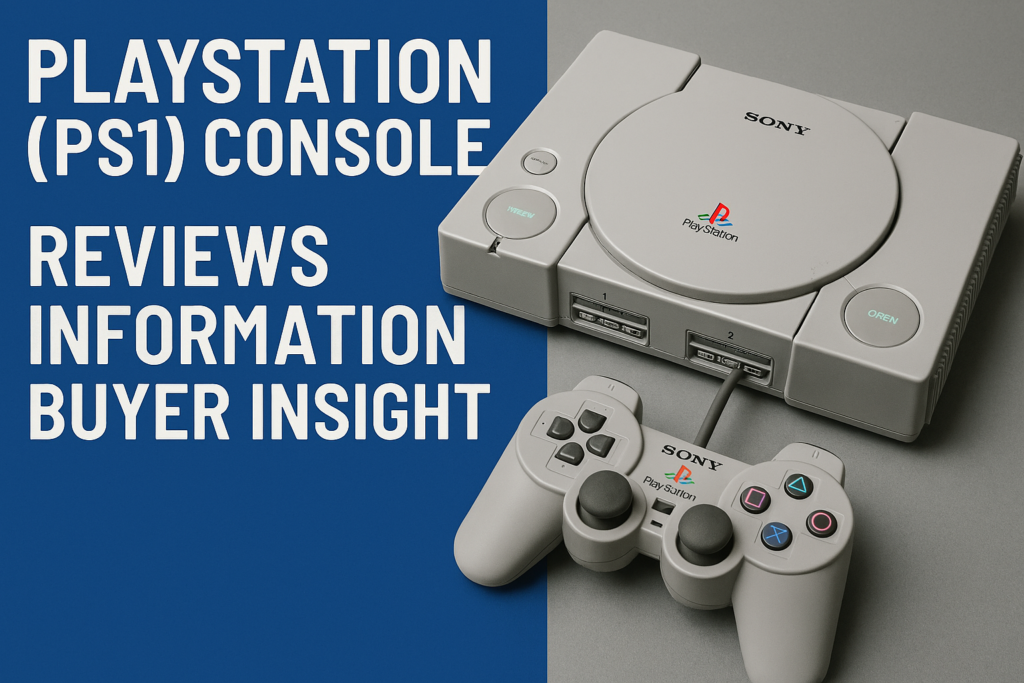
The original Sony PlayStation, widely known as the PS1, is one of the most influential gaming systems ever released. Debuting in 1994, it marked Sony’s entry into the console market and immediately disrupted the industry with its focus on 3D graphics, CD‑based games, and developer‑friendly hardware. At a time when cartridges still dominated, the PS1’s use of CDs allowed for larger game worlds, cinematic storytelling, full‑motion video, and high‑quality audio that simply wasn’t possible on competing platforms. This shift opened the door for new genres, new studios, and a wave of iconic franchises that would define gaming for decades.
The PS1’s controller layout — four face buttons, a D‑pad, and shoulder buttons — became the foundation for modern gamepad design. Later, the DualShock controller introduced dual analog sticks and vibration feedback, features that quickly became industry standards. Sony intentionally built the PS1 to be easy for developers to work with, which led to massive third‑party support from studios like Square, Capcom, Namco, and Konami. As a result, the PS1 library exploded with genre‑defining titles across RPGs, racing, action, survival horror, and fighting games.
With more than 100 million units sold, the PS1 became a global phenomenon and established Sony as a dominant force in gaming. Its influence can still be felt today — not just through the franchises it launched, but through the standards it set for hardware design, cinematic presentation, and third‑party partnerships. For collectors and retro gaming fans, the PS1 remains one of the most rewarding systems to revisit thanks to its deep library, iconic soundtracks, and timeless gameplay.
Key Features
- CD‑ROM format enabling larger games and cinematic storytelling
- Breakthrough 3D graphics for the mid‑90s era
- Iconic controller layout with later DualShock upgrade
- Massive third‑party support across all genres
- Legendary game library with long‑running franchises
Hardware Specifications
- CPU: 32‑bit R3000A‑compatible processor @ 33.9 MHz
- GPU: Sony custom 3D engine
- RAM: 2 MB system RAM, 1 MB VRAM
- Storage: CD‑ROM discs, memory card saves
- Video Output: 240p–480i depending on game
- Audio: 24‑channel ADPCM sound
Console Variants & Revisions
- Original PlayStation (SCPH‑1000 series) — Launch hardware with early disc drive design.
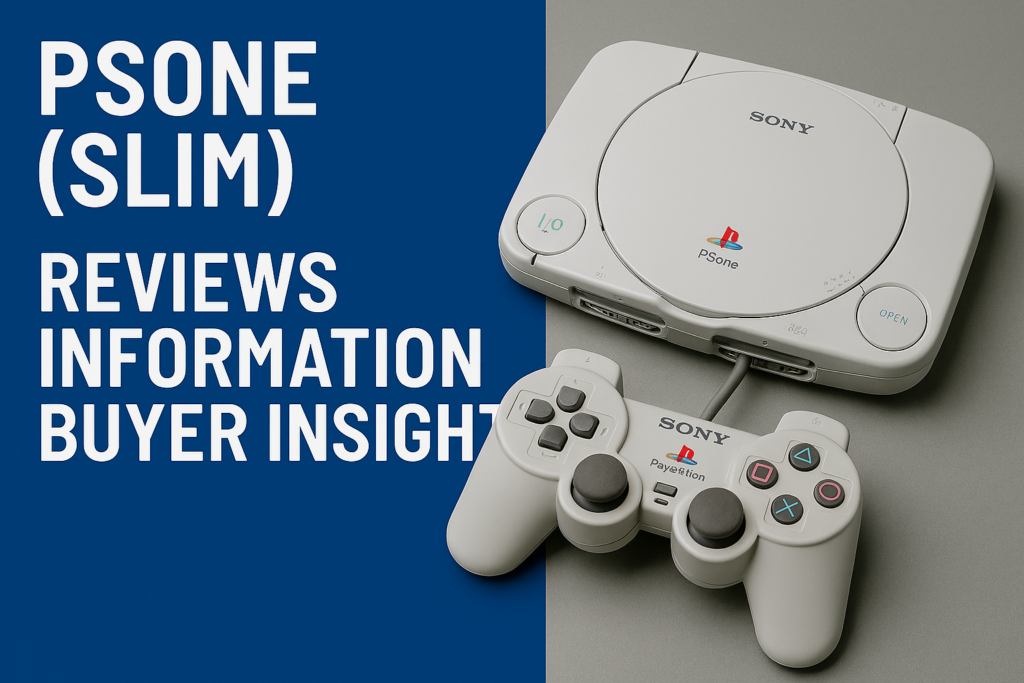
- PSOne (2000 redesign) — Smaller, lighter revision with optional LCD screen.
- Debug / Development Units — Used by studios for testing and building PS1 titles.
Buy PlayStation (PS1) Consoles, Games & Accessories
🛒 Shop PS1 Consoles on Amazon 🎮 Shop All PS1 Games 🎒 Shop PS1 AccessoriesNotable PS1 Games
PS1 Accessories
PlayStation (PS1) FAQ
Is the PS1 still worth buying today?
Yes. The PS1 is still worth buying for collectors and retro gamers who want original hardware, physical discs, and authentic controller feel. Many of its best games remain highly playable and historically important.
Can the PS1 play PlayStation 2 or PlayStation 3 games?
No. The PS1 can only play original PlayStation game discs. Some later PlayStation consoles offer backward compatibility with PS1 games, but the PS1 itself does not run PS2 or PS3 titles.
What cables do I need to hook up a PS1 to a modern TV?
Most PS1 consoles use composite AV cables by default. To connect to modern TVs, many players use composite‑to‑HDMI adapters or dedicated retro gaming upscalers for a cleaner image.
Do I need a memory card for the PS1?
Yes. Game saves are stored on external memory cards, not on the console itself. Without a memory card, most games will not retain progress between sessions.
What’s the difference between the PS1 and the PSOne?
The PSOne is a smaller, redesigned version of the original PlayStation released later in the console’s life. It offers the same game compatibility in a more compact shell, sometimes paired with an optional LCD screen.