For six people, decide whether everyone must belong to the current game or whether rotating between games is acceptable. Six people on a team sheet does not mean six people throwing, hitting or moving at once. The useful comparison is each person’s role and the wait between turns.
Three workable arrangements
| Arrangement | Documented starting point | Participation tradeoff |
|---|---|---|
| Two teams of three | Kubb supports a group divided into two teams. | Everyone belongs to the match, while throws occur in turns. |
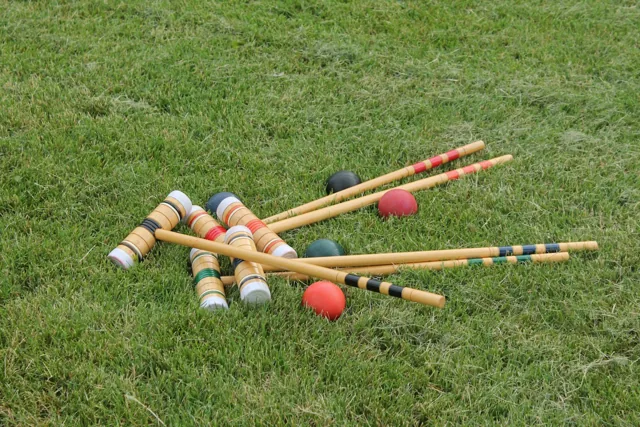
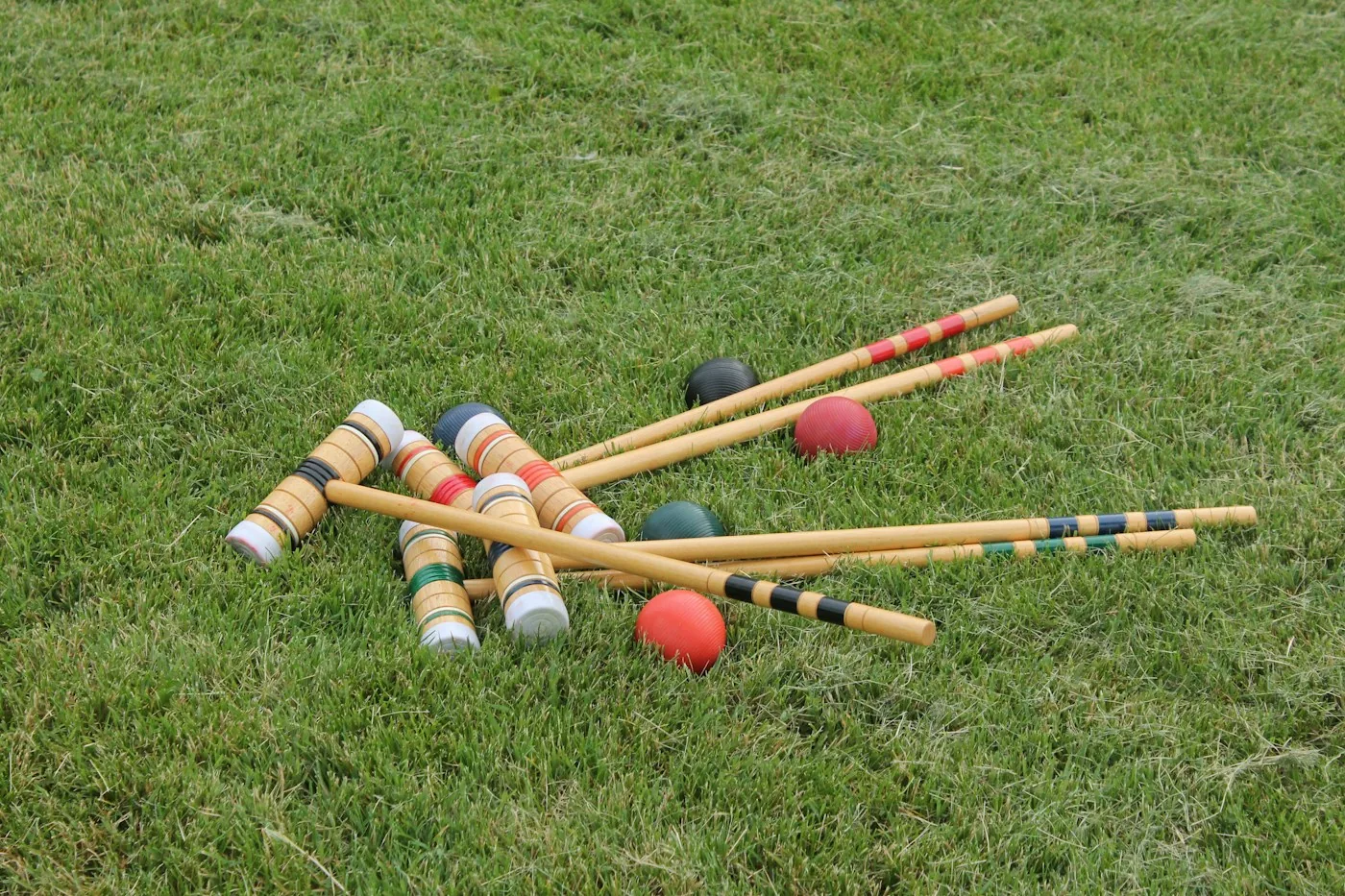
| Six individual colors | A six-player croquet set provides a ball and mallet for each player. | All six can be in the game, but each waits through the turn order. |
| Three pairs rotating | Kan Jam’s standard game uses two teams of two. | Four play the current match; the third pair waits or uses another station. |
The Kubb World Championship introduction describes 2–12 participants. Franklin’s Intermediate Croquet set 50201X contains equipment for up to six. Kan Jam’s rules specify four players. These are different participation structures, not interchangeable “party game” capacities.
Fit the game to the gathering
Choose Kubb if your six guests want a shared team objective and are comfortable taking individual throws. Agree how teammates share throwing opportunities before starting, using the rules appropriate to your event. A team format can keep everyone invested without making everyone physically active every moment.
Choose six-player croquet if each person wants their own ball and position in a continuing game. Walk the proposed course before buying: six mallets do not make a cramped or obstructed lawn suitable. If the group prefers brief rotating matches, a four-player game can still work, but the waiting pair should know the schedule.
Plan time without inventing a play-speed promise
For a simple hypothetical rotation, pairs A and B play first, A and C second, and B and C third. Each pair plays twice and sits out once. That is a fair scheduling structure, not an estimate of how long a particular match lasts. Allow room for instruction, score disputes and equipment retrieval.
When the time is fixed, agree on a timed or round-limited house format before starting and label it as an adaptation. Do not call a shortened event an official tournament merely because it uses official equipment.
Check the yard and the people
- Measure the game’s layout plus space for waiting and retrieval.
- Keep other activities and walking routes out of the throwing area.
- Check the exact set’s age guidance and the physical actions each person will perform.
- Choose who teaches and who keeps score.
- Agree what happens when someone leaves or wants a break.
Buy one game only if its participation pattern suits the whole gathering. If two people will otherwise spend most of the afternoon waiting, a second small station or a different team format may be more useful than a premium version of the same four-player set.
Plan the next step
Explore Team & Group Games for related choices. Record equipment dimensions, playing area and storage space separately; none of them substitutes for the others.
Sources and method
Rules-body and manufacturer sources checked November 2, 2026. Buying criteria, layout arithmetic and proposed house rules are editorial analysis. This guide does not include hands-on play, weather exposure, durability or accessibility testing.