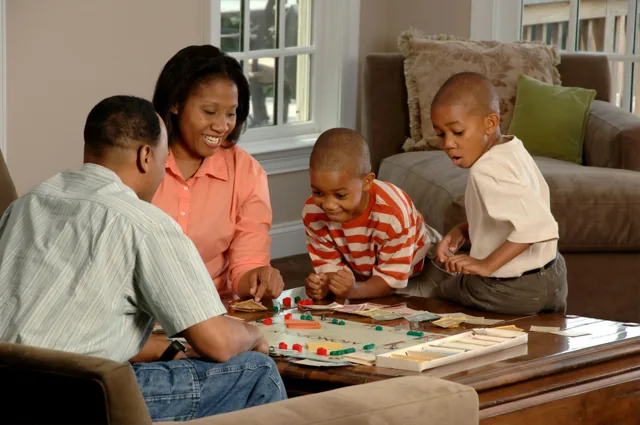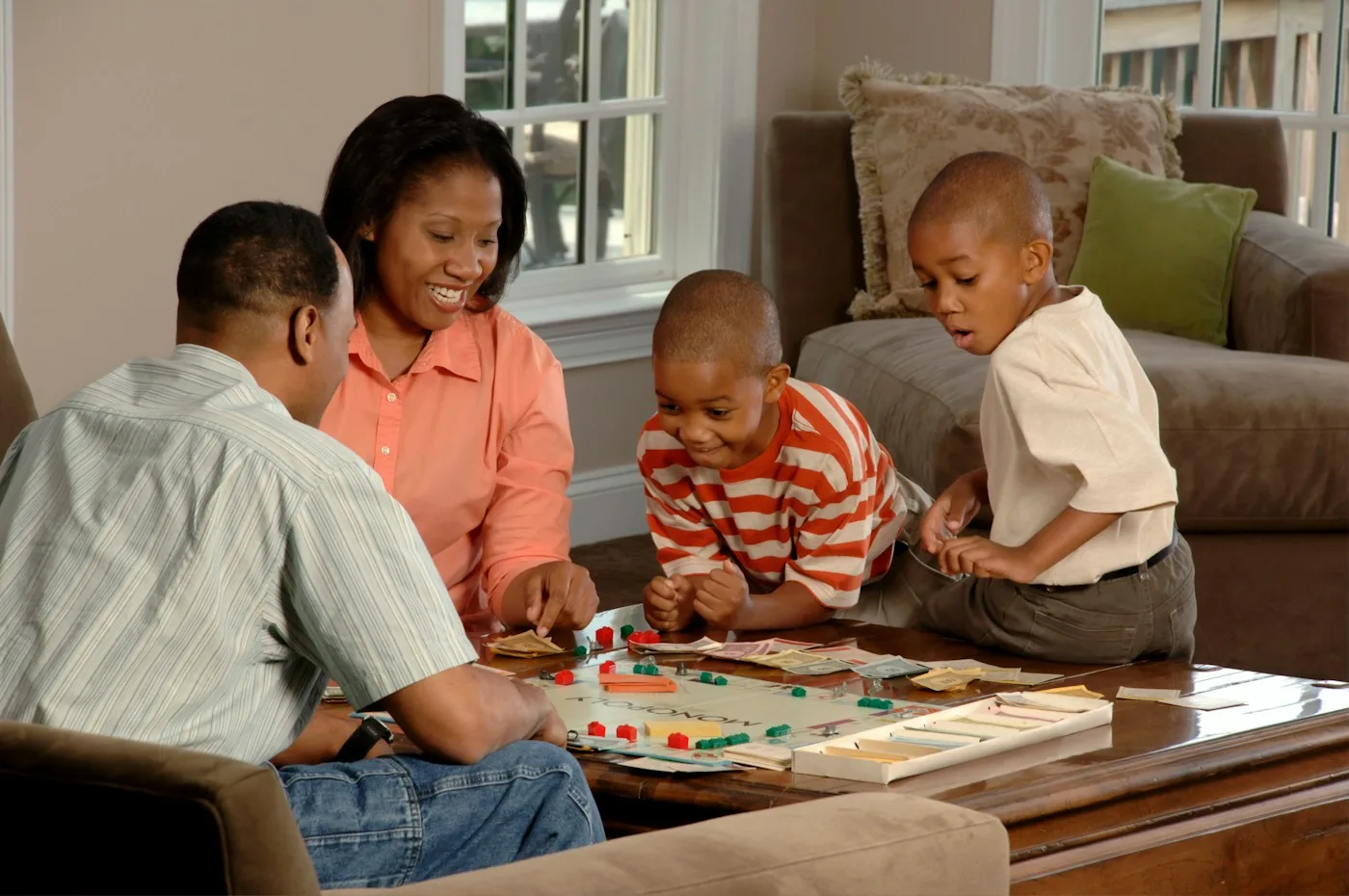
A family game should fit the people who will actually play. Consider reading, number work, attention, handling small components, and comfort with competition alongside the manufacturer’s age guidance. An age label is a starting point, not a promise that a game suits every child.
Choose how you want to play together
Cooperative games give the group a shared objective; competitive games ask players to pursue their own result. Either can work well when the rules and expectations suit your household. Check whether adults can help without taking over and whether younger players can make meaningful choices. For mixed ages, consider how much private reading or hidden information the game needs.
Make the first session manageable
Allow time to explain, set up, play, and put the pieces away. Compare the actual contents and rules rather than judging only by the box artwork. Think about your available table space and whether a game needs an adult to prepare materials or supervise its use.
Explore by activity
Visit board games for a table-based session, puzzles and brain games for shared problem solving, or outdoor games for active play. For a screen-based choice, check the exact platform, accounts, play mode, and content information in video games.