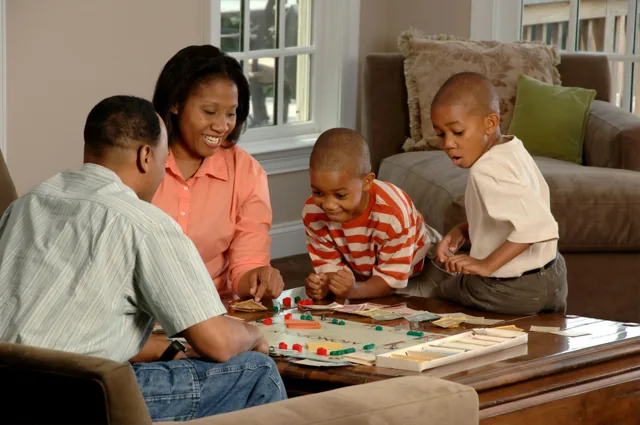
Build a small family collection around different situations, not a stack of similar-looking recommendations. A useful first collection covers the household player counts, time windows, and preferred forms of participation.
Give every box a separate job
You might want one quick familiar game, one shared-goal game, one more thoughtful challenge, and one option for a larger gathering. Those are example roles rather than a requirement to buy four products. A single game may cover two roles well enough for your family.
| Role | Question it should answer |
|---|---|
| Short everyday session | Can we complete setup, teaching, play, and cleanup in our usual window? |
| Shared challenge | Does each person have a meaningful way to contribute? |
| Thoughtful competition | Do the players enjoy the kind of conflict and planning involved? |
| Guests or mixed ages | Does the exact player count and information load fit? |
Use candidate differences deliberately
Qwixx offers number decisions on personal sheets; Outfoxed! provides a cooperative deduction structure; Kingdomino focuses on terrain placement. They illustrate distinct jobs, but their official player and age ranges still need to match your household. This is not a claim that everyone needs these three boxes.
Check overlap before adding another game
Describe the new purchase without naming its theme. If the description is almost identical to something the family already plays, ask what practical problem it solves. A new player count, a different interaction style, or a shorter complete session is a stronger reason than a cosmetic change alone.
Keep the first purchase usable
Buy a standalone edition with the required components. Leave expansions and premium accessories until repeated play reveals an actual need. Store the rules and pieces so someone other than the main organizer can set up the game.
Let the collection grow from observed use
After several sessions, note which situations are still uncovered. A family that rarely gathers five people may not need a large-group purchase immediately. A household that always has twenty minutes may need a different next game from one planning long weekend campaigns. The right collection is the one that gets used.
Sources and method
This is a researched decision guide. Product facts were checked against the primary sources below on November 2, 2026. Selection advice and worked examples are editorial reasoning. This guide does not include hands-on testing.
- Gamewright: Qwixx specifications and rules
- Gamewright: Outfoxed! specifications and components
- Blue Orange: Kingdomino specifications and mechanism
We may earn a commission when you purchase through links on this page. As an Amazon Associate I earn from qualifying purchases.