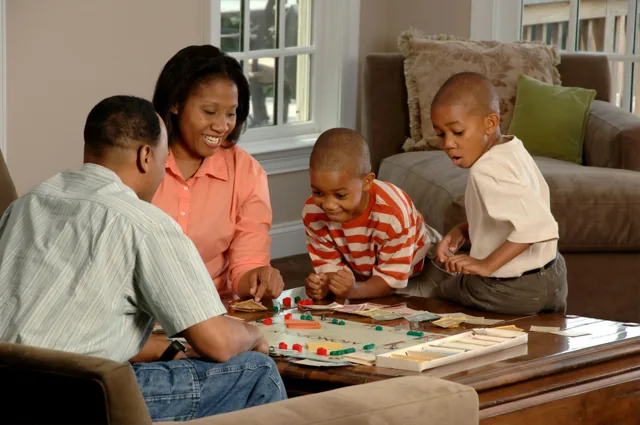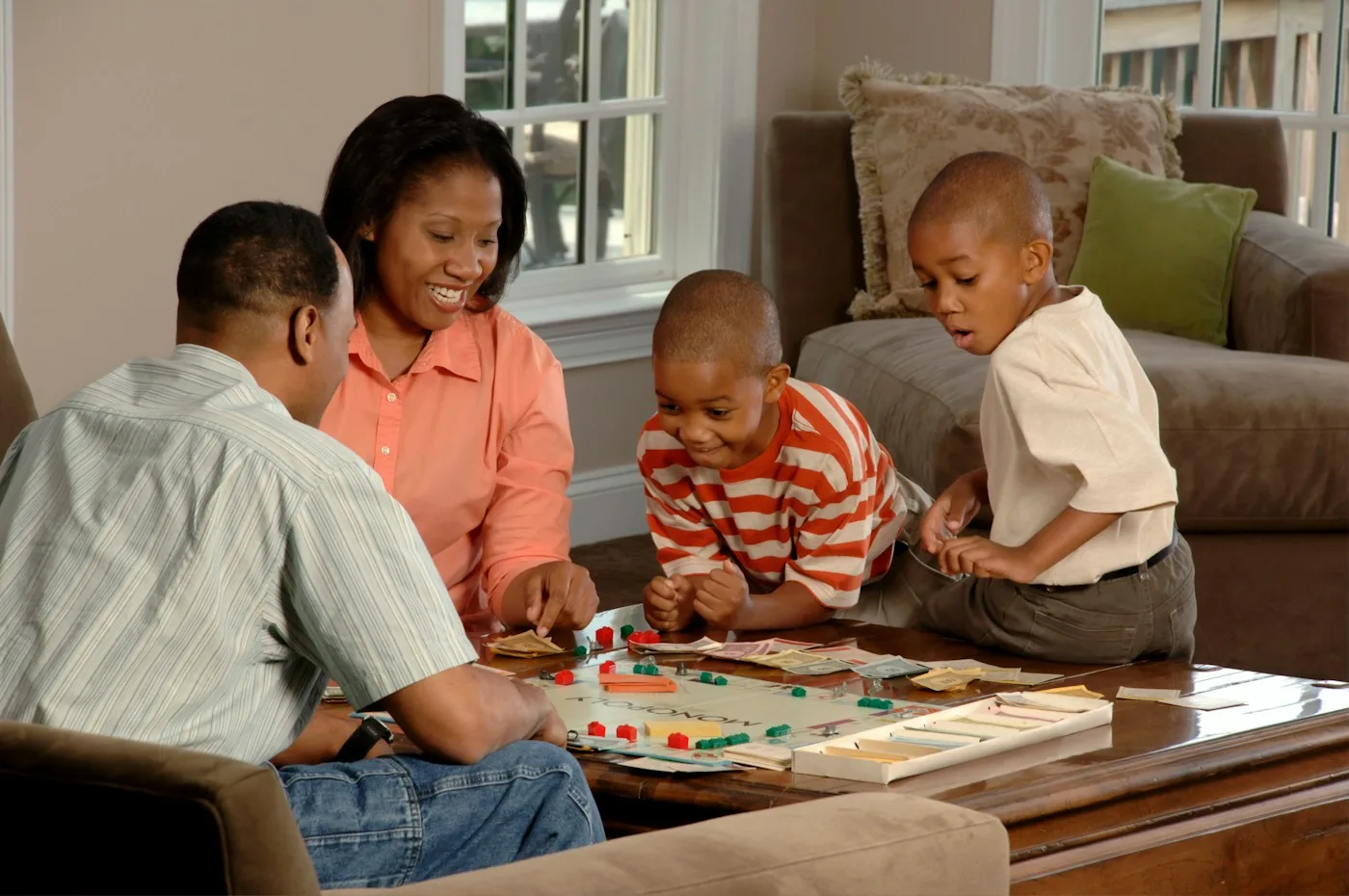
For a waiting room or restaurant table, choose an activity that can stop cleanly, stay within a small surface, and respect the people sharing the space. A portable box alone does not establish those qualities.
Measure the usable area
Leave room for the purpose of the table: food, drinks, forms, or personal items. Include draw piles, discards, scoring, and each player’s hand area. If the layout has not been measured, do not promise that a named game fits every café table or airline tray.
Choose an easy stopping point
A short complete game or an agreed practice activity is easier to pause than a campaign or a score carried across several rounds. Sushi Go!, for example, totals a full game across three rounds; one deal is not the complete official scoring experience. Decide beforehand whether you are playing a full game or a casual demonstration.
Keep sound and movement practical
Dice, towers, shouted answers, and broad gestures can make a quiet setting awkward. A card-based activity may reduce some movement, but it can still require discussion or spreading cards. We have not measured sound levels for the games discussed, so quiet is a planning goal rather than a tested product rating.
A compact example with an important limit
Hive Pocket has a small packed format and no fixed board, but its playing structure expands as tiles are placed. It is for two players with publisher guidance of ages nine and up. Check the real surface and participants rather than treating the travel format as a universal child-friendly answer.
Prepare a complete, recoverable kit
Carry the exact rules, any required scoring tool, and a simple pouch for loose pieces. Count components before leaving. If the activity requires a device for essential rules or scoring, it does not meet a strict screen-free requirement unless a complete permitted paper alternative exists.
Use the setting as the final filter
If staff, other visitors, or the activity itself make a game impractical, choose a simple conversation or observation activity instead. The successful choice is one that fits the moment, not one that forces a full boxed-game session into a space designed for something else.
A no-equipment option for the wait
A no-equipment option is a quiet object-guessing game: one person chooses a visible object, the others ask yes/no questions, and the chooser gives a hint when the group wants it. Agree that play stops when the table is needed. This is an informal activity suggestion, not a commercial game’s official rules. Take turns choosing the object so nobody has to run the activity throughout the wait.
Sources and method
This is a researched decision guide. Product facts were checked against the primary sources below on November 2, 2026. Selection advice and worked examples are editorial reasoning. This guide does not include hands-on testing.
We may earn a commission when you purchase through links on this page. As an Amazon Associate I earn from qualifying purchases.