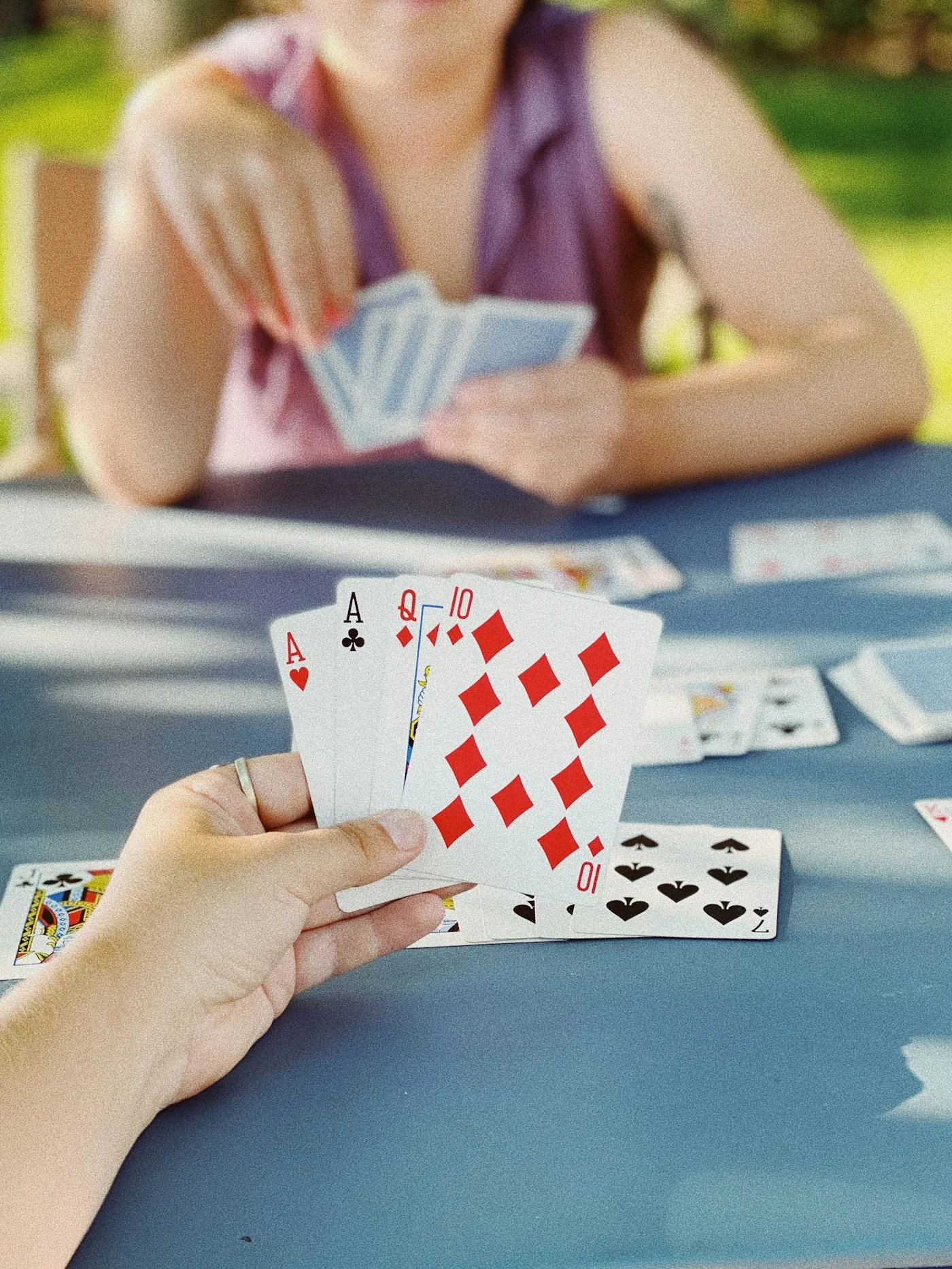
For an intergenerational gathering, plan around the people attending rather than an average age. Reading, hearing, reach, cultural references, and willingness to perform can vary independently within every age group.
Start with practical participation
Ask what each person is comfortable doing: writing privately, discussing a shared clue, holding cards, moving around, or answering personal questions. Do not infer those preferences from age alone. A game that everyone can physically join is still a poor fit if several guests dislike its central task.
| Check | A concrete question |
|---|---|
| Content | Do the actual prompts suit this gathering? |
| Language | Can everyone understand the chosen edition? |
| Visibility | Can shared words and symbols be read from each seat? |
| Response | Is writing, speaking, or movement comfortable? |
| Attendance | Does the official player range include everyone who wants to join? |
Use age guidance without turning it into a guarantee
Current Just One is listed for ages eight and up; Herd Mentality and Telestrations second edition use a ten-and-up guideline. Those differences matter when children attend, but they do not establish that every older guest will enjoy the same references or handling tasks. Follow the exact product guidance and inspect the actual materials.
Choose the kind of shared moment
Just One may suit a group that wants word associations. Herd Mentality offers a majority-answer structure for a larger group. Telestrations offers drawing and interpreting messages. These are distinct options, not an interchangeable list of games for everyone. If personal questions or acting are unwelcome, select a format that does not make them the main activity.
Make help fair and discreet
A shared prompt can be read aloud, but hidden information needs a plan. Position components so people do not have to reach across others. Give enough explanation to understand a choice without taking the decision away from the person you are helping. Ask what would help instead of imposing a solution.
Plan around food and arrivals
Choose a complete starting point after the expected guests arrive, and finish a game before a major transition where possible. Keep a quieter optional activity available for people who prefer a different pace. Guests should be able to sit out without being treated as the reason the main plan failed.
Review what happened afterward
Notice which task people chose to repeat, where explanation was needed, and whether the seating worked. Those observations are more useful for the next gathering than assuming a broadly marketed family game must have been suitable. This guide supplies a planning framework, not measured accessibility results.
Sources and method
This is a researched decision guide. Product facts were checked against the primary sources below on November 2, 2026. Selection advice and worked examples are editorial reasoning. This guide does not include hands-on testing.
- Repos Production: current Just One edition
- Big Potato: Herd Mentality contents, player range and mechanism
- The Op: Telestrations 8 Player, second edition
- The Op: Telestrations 12 Player, second edition
We may earn a commission when you purchase through links on this page. As an Amazon Associate I earn from qualifying purchases.