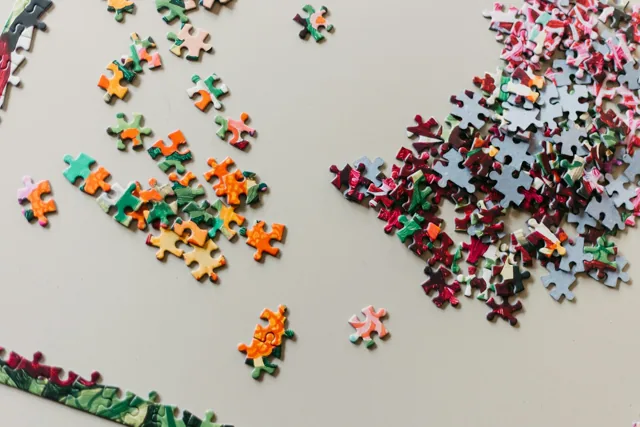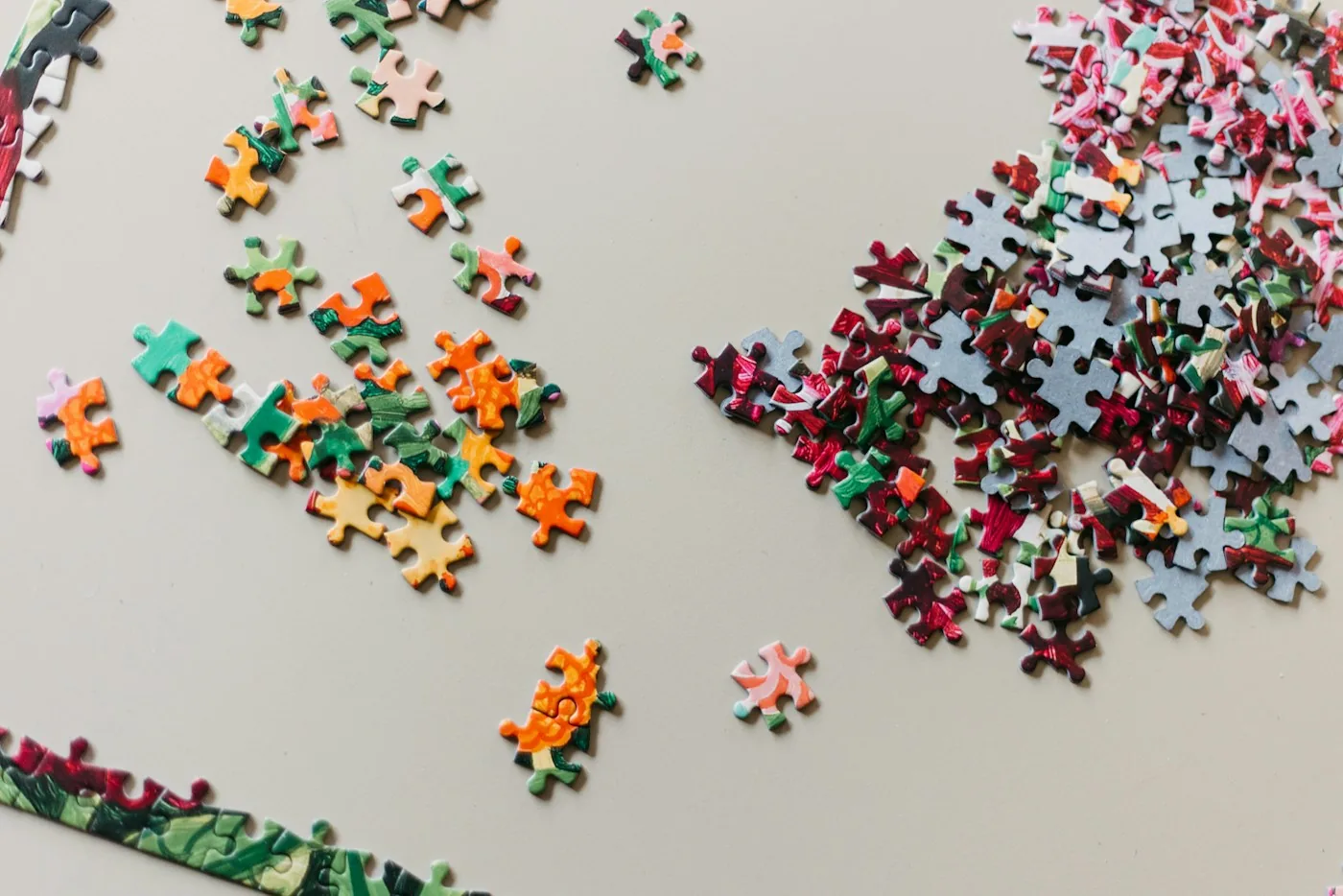
Buy a wooden jigsaw by the exact material, thickness, cut and finished size of that edition. “Wooden” describes a broad construction category. It does not establish one standard thickness, one style of interlock or a predictable difficulty relative to cardboard puzzles.
Compare actual construction statements
Wentworth’s thickness update explains its move to 4 mm wood for new puzzles while noting that some earlier designs may exist in either 3 mm or 4 mm versions. That makes the edition and stock you receive relevant, especially for a used purchase or an older listing.
As a separate example, Artifact Puzzles’ Our Gentle Giant specifies 326 pieces and quarter-inch wood. One quarter inch is 6.35 mm. This conversion is arithmetic, and it does not imply that every product sold under either brand uses the same construction.
| Feature | Why it matters |
|---|---|
| Material and thickness | Affects the physical object you handle and the depth needed for storage or framing. |
| Cut style | Regular pieces, irregular shapes and themed pieces create different solving tasks. |
| Finished outline | A free-form shape may need a different surface or mounting approach. |
| Exact edition | The same artwork can appear at different sizes, counts or production revisions. |
Understand themed pieces without counting them as a score
Whimsy pieces are recognizable shapes incorporated into a cut, such as an animal or an object related to the artwork. Inspect the exact product description and any example images. The presence of themed pieces does not tell you how many there are unless the maker states a count.
Do not judge difficulty solely by low piece count. Unusual boundaries, irregular cuts and repeated imagery can change the task. If you like building a conventional border first, check whether the puzzle actually has one. A free-form design may be intentionally different.
Check the image and finish you are buying
Use the manufacturer’s picture of the exact artwork and version. A close-up can help you understand the printed image and cut, but a product photograph does not establish color accuracy under your lighting or how the surface feels in hand. We have not tested those qualities here.
For gifts, confirm the age guidance and small-component warnings. Do not assume wood makes every puzzle appropriate for younger children. A decorative adult puzzle can contain small or unusually shaped pieces even when the overall object looks substantial.
Think through storage and display
Record the finished dimensions and actual thickness separately. A frame that accommodates a thin paper print may not close around a wooden puzzle plus backing and mounting materials. If you want to display a nonrectangular puzzle, plan how its projections will be supported.
For a used copy, request the exact edition, a complete assembled photograph and a condition description. A count alone cannot prove that every correct piece is present if pieces from another cut have been mixed in. Ask about repairs or replaced pieces without assuming a missing-piece service is available.
Make a defensible choice
Choose a cut style and image you want to spend time with, then verify physical fit and edition identity. If thickness is not stated for the exact stock, keep it unknown and confirm it before buying accessories. A careful purchase matches the object you will receive, not just a brand’s current general marketing description.
Sources and method
This researched guide uses the publisher or manufacturer sources below, checked November 2, 2026. Comparisons, buying criteria and worked examples are editorial reasoning. This guide does not include hands-on testing or measured solving times.