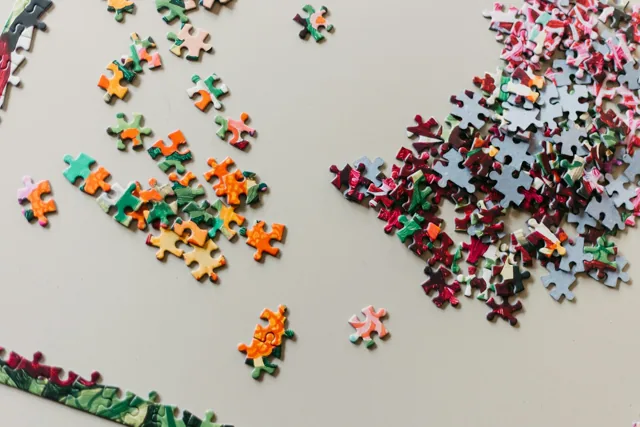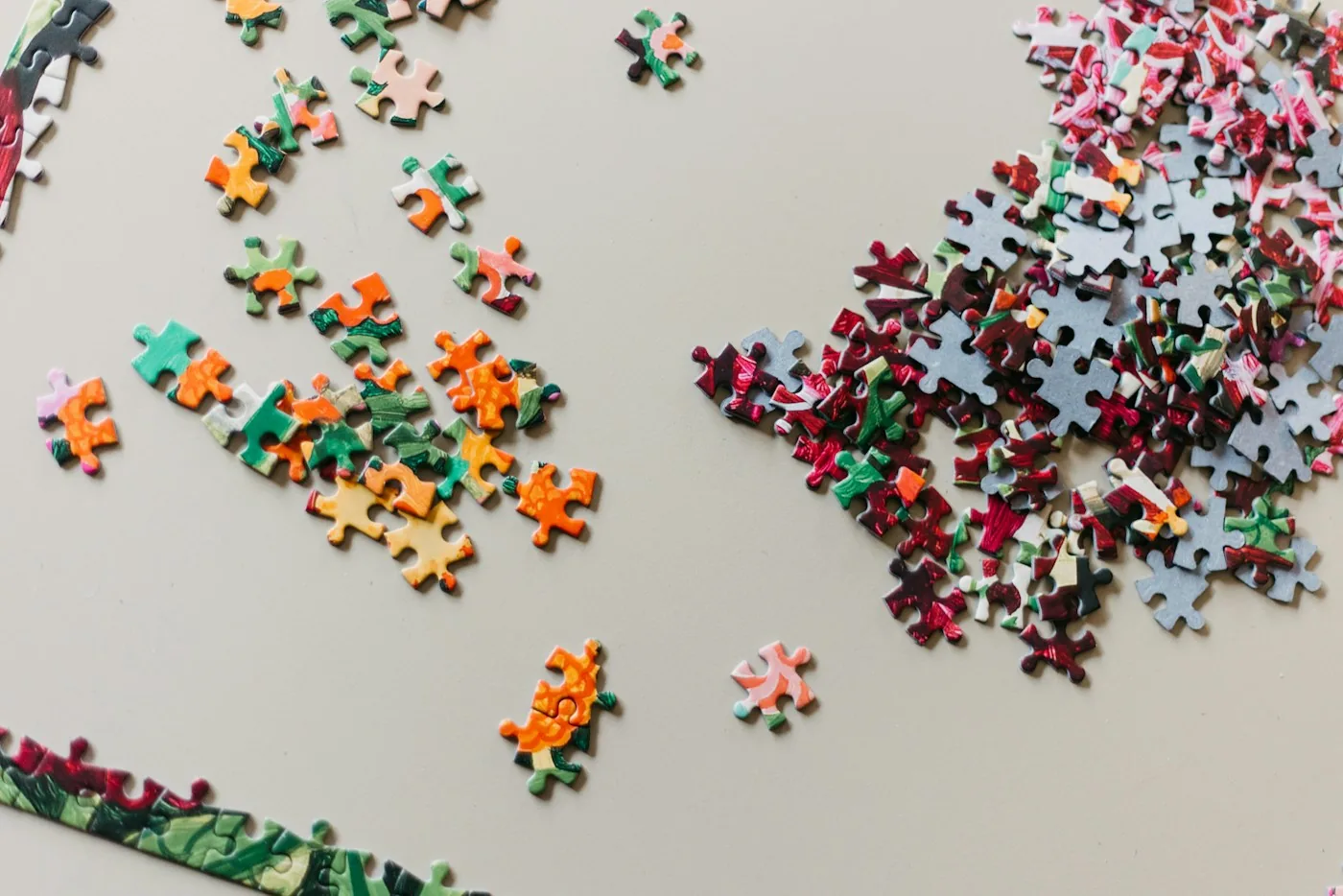
A visible-reference jigsaw lets you work toward a picture shown on the box or poster. A mystery format may ask you to build a different scene, a later moment or a character’s viewpoint. Read that premise before buying, especially if you enjoy matching every piece to a complete reference image.
Find out what the picture represents
Wasgij’s official collection guide distinguishes three concepts: Original asks for the scene a pictured character can see, Destiny shifts the scene into the future, and Mystery asks what happens next. The packaging is a clue to a different completed image rather than a full answer key.
Those definitions belong to the named collections. Another product described as a mystery puzzle might instead include a story booklet, a hidden clue or a separate riddle after assembly. Preserve the publisher’s exact description rather than assigning every mystery-branded box the same rules.
| Format | What you know at the beginning | Preference it may suit |
|---|---|---|
| Complete visible reference | The target image is supplied, subject to the exact product. | You like matching details and planning regions from the finished picture. |
| Changed viewpoint or time | The supplied scene helps you infer another image. | You enjoy discovery and working without a full visual answer. |
| Story or riddle combined with a jigsaw | The puzzle has an additional narrative or solving task. | You want to read instructions and pursue a separate objective as well as assembly. |
Decide whether concealment is enjoyable
Without a full target image, you may rely more on local color, shape and emerging objects. That is a change in the available information, not proof that every mystery puzzle is harder than every conventional one. A complex visible-reference image can still present a substantial challenge.
If you prefer knowing what the completed artwork will look like before displaying it, a concealed image creates a different purchase risk. Look for non-spoiler information about theme and format, and decide whether the surprise is part of what you want.
Protect the surprise while researching
Use the official collection explanation and spoiler-free product description first. Retail photographs or customer reviews can sometimes show a completed puzzle. Avoid opening those if discovery is important to your experience; a product comparison should not reveal the ending just to prove that the image differs.
For a gift, describe the premise rather than disclosing the solution. Confirm that the recipient enjoys inference and unexpected pictures. Someone who wants a particular landscape to frame may prefer a product that clearly shows its finished artwork.
Check ordinary fit and content requirements
The hidden-image premise does not remove the need to compare finished dimensions with your surface. Ravensburger’s size guide illustrates that puzzle formats can have different proportions. Use the exact mystery product’s own dimensions and piece count rather than transferring a standard-size assumption.
If the box includes text, a booklet or clues, verify the language edition. Also check whether answers, hints or a reference poster are included and how they are packaged. Do not promise a spoiler-free hint system unless the exact product provides one.
Buy the type of uncertainty you want
Choose a visible-reference puzzle when the supplied picture is part of your preferred solving method or you need to know the final display image. Choose a concealed or transformed-image format when discovering that image is an appealing part of the activity.
For a used copy, inspect completeness without exposing the result unnecessarily. Ask the seller to label any completed-image photograph as a spoiler. Keep the distinction clear: a missing reference picture is a condition problem in a product that requires it, while an intentionally hidden picture is part of the design.
Sources and method
This researched guide uses the publisher or manufacturer sources below, checked November 2, 2026. Comparisons, buying criteria and worked examples are editorial reasoning. This guide does not include hands-on testing or measured solving times.