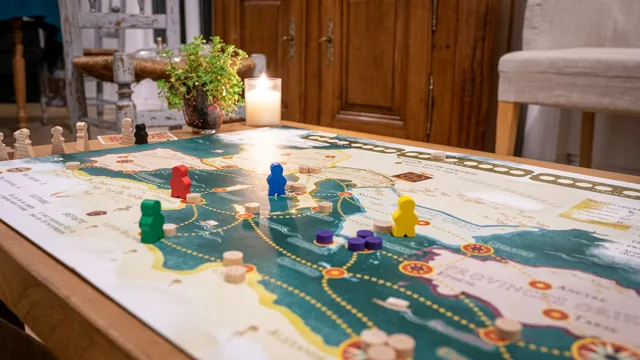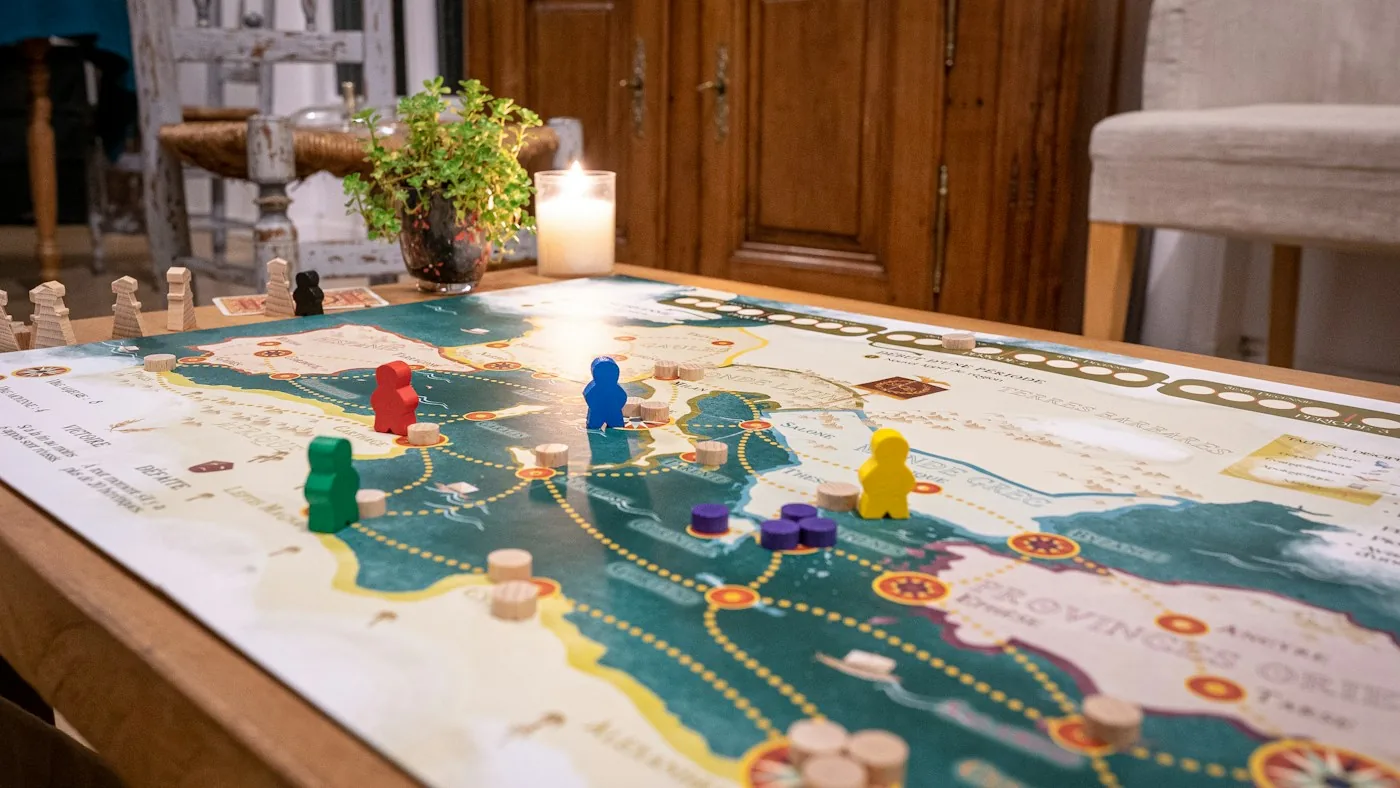
Choose the kind of decisions you want to make: building an engine, managing a shared economy, competing over a map, or adapting to a changing puzzle. A strategic game can be inviting or demanding; the theme alone will not tell you how much planning it asks from the table.
What to compare
Interaction
Ask where players affect one another. A shared market, contested route, direct attack, and mostly personal puzzle create very different evenings.
Decision load
Look for a rules explanation and an example turn. Separate the number of rules to learn from the number of options you must weigh during play.
Recovery
Consider what happens after an early mistake. Some groups enjoy a long tactical challenge; others want chances to recover or a quick rematch.
A detail worth checking
An attractive production or long component list does not tell you whether the decisions will suit your group. Check the actual player mode and the space used by personal boards as well as the central board.
Make your next session easier
Before choosing, agree on a realistic finish time and how much direct competition everyone wants. Then compare games on those two priorities before adding expansions.