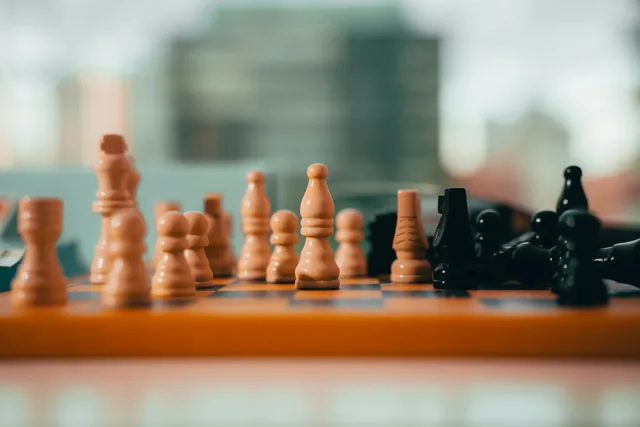
For two people, choose an abstract game by the kind of decision and physical interaction you want. Familiarity, table space, and the willingness to study a shared rules reference matter more than a claim that one classic is best for everyone.
| Game or format | Main interaction | Equipment question |
|---|---|---|
| Chess | Move pieces with different roles on a fixed board | Are the shapes clear and the bases compatible with the squares? |
| Go on 9×9 | Place stones and reason about surrounding space | Do the stones fit the grid and can both players reach the bowls? |
| Six-pocket-per-side mancala rules linked here | Pick up and distribute pieces among pockets | Are the pockets and piece sizes comfortable to use? |
| Hive Pocket | Place and move insect tiles in an evolving arrangement | Is there enough free surface for the position to grow? |
Choose the learning commitment
Chess asks players to remember different piece movements. Go uses a common placement action but develops questions about capture, territory, and game ending. The cited mancala version uses a repeated distribution procedure with its own capture conditions. These are editorial comparisons of the rules, not measurements of which game is easiest.
A compact box does not fix the footprint
Hive Pocket is listed by Gen42 as a two-player game with twenty-six tiles and no fixed board. Its box is compact, but the arrangement changes during play. A small Go grid can likewise be printed on a larger board with generous margins. Measure the actual playing setup instead of sorting games by box size alone.
Consider the repeated hand movement
Moving a tall chess piece, placing a small stone, and distributing several mancala pebbles feel different. Look at what each player will do many times rather than judging only the first setup. We have not conducted accessibility or dexterity testing; the useful question is whether the actual components suit the two people playing.
Keep uncertainty and information preferences separate
These examples emphasize visible positions and deliberate choices, but they do not all produce the same pacing or discussion. Ask whether you want silent concentration, a teaching game with open explanation, or a shorter casual encounter. Set that expectation together so coaching is not mistaken for interference.
Use one complete reference
Agree on the game and variant, then use a consistent rules source. This is especially important for traditional games with regional differences. If you simplify a learning session, identify it as practice and restore the complete procedure when you want a normal competitive result.
A practical starting choice
Choose chess when familiar piece roles and a widely shared notation appeal. Choose a small Go board when placing stones and surrounding space is the attraction. Choose the named mancala format when the distribution action is appealing, or Hive Pocket when you want an established portable design with a changing layout. The best next purchase fills a specific preference rather than duplicating a role you already enjoy.
Sources and method
This is a researched decision guide. Product facts were checked against the primary sources below on November 2, 2026. Selection advice and worked examples are editorial reasoning. This guide does not include hands-on testing.