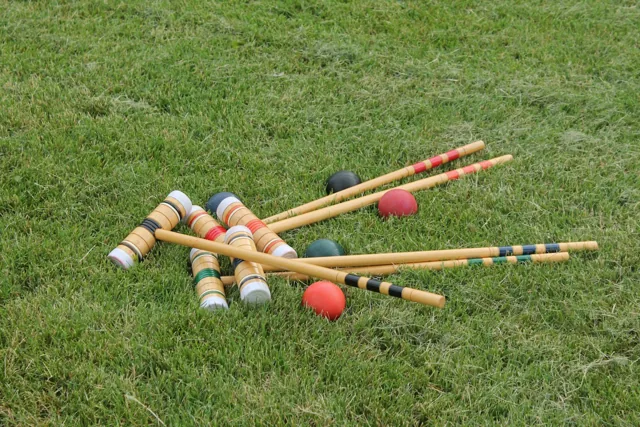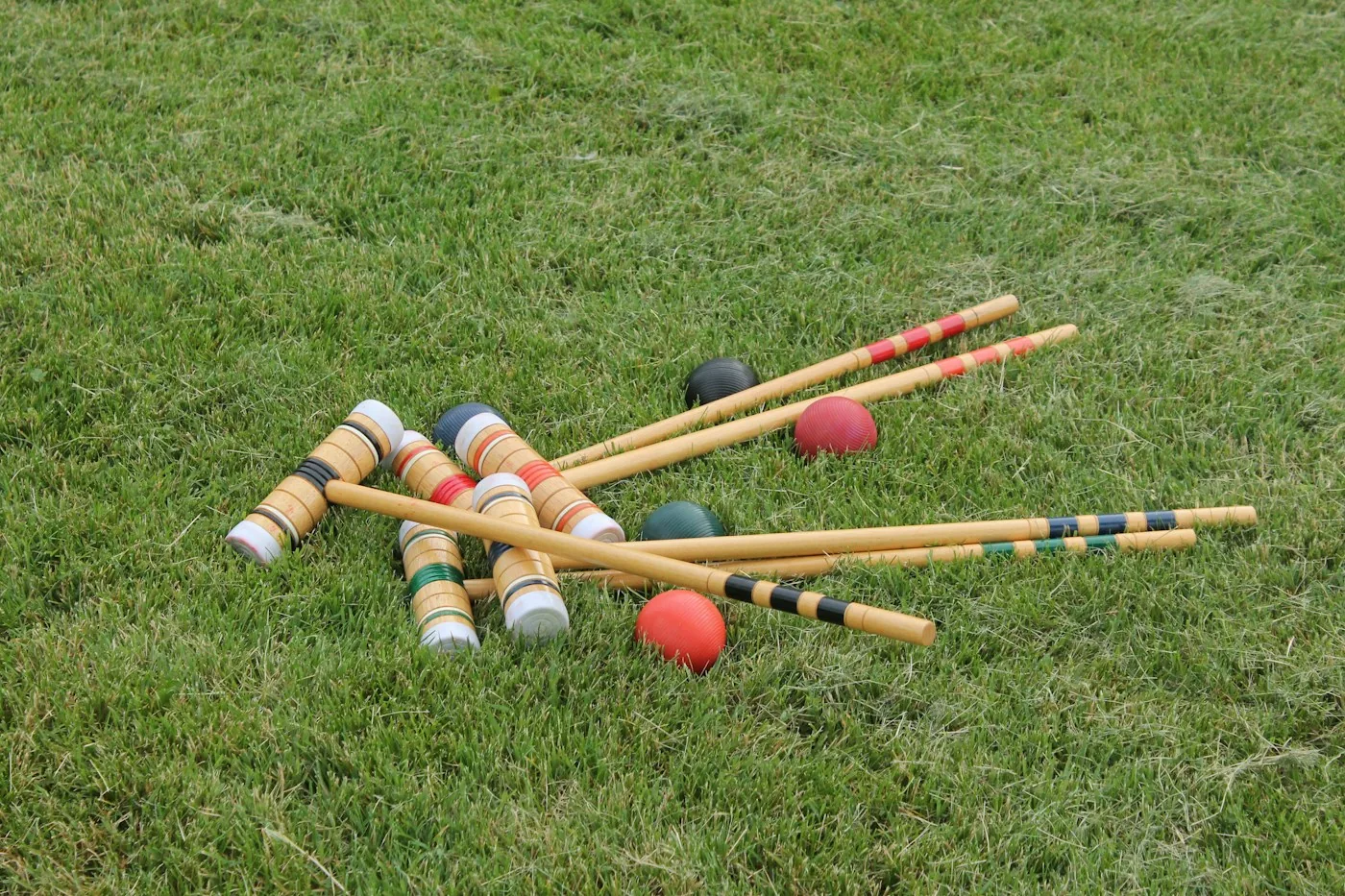
A complete Kubb purchase starts with the game pieces and the field you can use. Check the count and dimensions individually. A carrying bag or a “tournament” label does not establish that the wooden pieces match the rules you intend to follow.
Use a rules-body inventory
The U.S. National Kubb Championship rules page lists one king, ten kubbs, six batons, four corner stakes and two midpoint stakes. It specifies a 5 m × 8 m pitch for tournament play and gives the corresponding piece dimensions. It also explicitly allows recreational pitch dimensions to vary.
| Item | What to compare | Reason |
|---|---|---|
| King | Count, height and cross-section | It has a distinct role and cannot be inferred from a pile of similar blocks. |
| Kubbs | Ten pieces of the stated size | Small travel versions should not be silently presented as full-size equipment. |
| Batons | Six, with documented length and diameter | Matching the count alone does not establish matching handling or rules dimensions. |
| Markers | Corner and midpoint markers | A set can include the throwing pieces but omit useful layout items. |
| Case and rules | Actual supplied bag or box and rule sheet | These affect storage and first setup, not the game-piece specification. |
Read exact product dimensions
Country Kubb’s Premium listing provides separate king, kubb and baton measurements, a six-stake inventory and a canvas tote. It identifies poplar as its material. Compare those published measurements against the governing rules you plan to use rather than assuming every seller’s “tournament-size” wording means identical tolerances.
When one source uses inches and another centimeters, convert consistently and retain the original values. Rounded retail measurements can conceal a small difference. If strict event compliance matters, confirm it with the organizer or maker instead of deciding from a rounded listing alone.
Measure more than the rectangle
Mark the proposed pitch before ordering. The rules rectangle is the playing field; it does not describe every person’s standing, retrieval or spectator space. Keep the throwing direction clear of other activities and check the footing along the routes people will actually use.
For a smaller yard, agree on a recreational field and record its dimensions. A shorter field may make the game workable for your group, but it changes the setup from the tournament reference. Do not imply that a product’s smaller pieces automatically specify a particular safe field size.
Choose the right starter set
- Match the intended rules and exact piece inventory.
- Check material, finish and care instructions rather than assuming all wood behaves the same.
- Confirm packed dimensions and total weight if it must travel.
- Read the manufacturer’s age and use guidance for the exact set.
- Check replacement-piece availability before choosing a model for frequent group use.
A first set should make the rules and storage straightforward. Decorative finish, premium wood claims and case style come after the fundamental checks. We have not tested impact durability, measured playing time or verified any Amazon listing for the example above.
Plan the next step
Explore Lawn & Backyard for related choices. Record equipment dimensions, playing area and storage space separately; none of them substitutes for the others.
Sources and method
Rules-body and manufacturer sources checked November 2, 2026. Buying criteria, layout arithmetic and proposed house rules are editorial analysis. This guide does not include hands-on play, weather exposure, durability or accessibility testing.