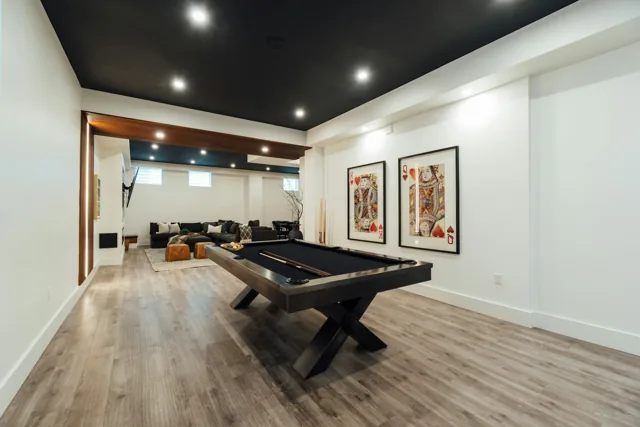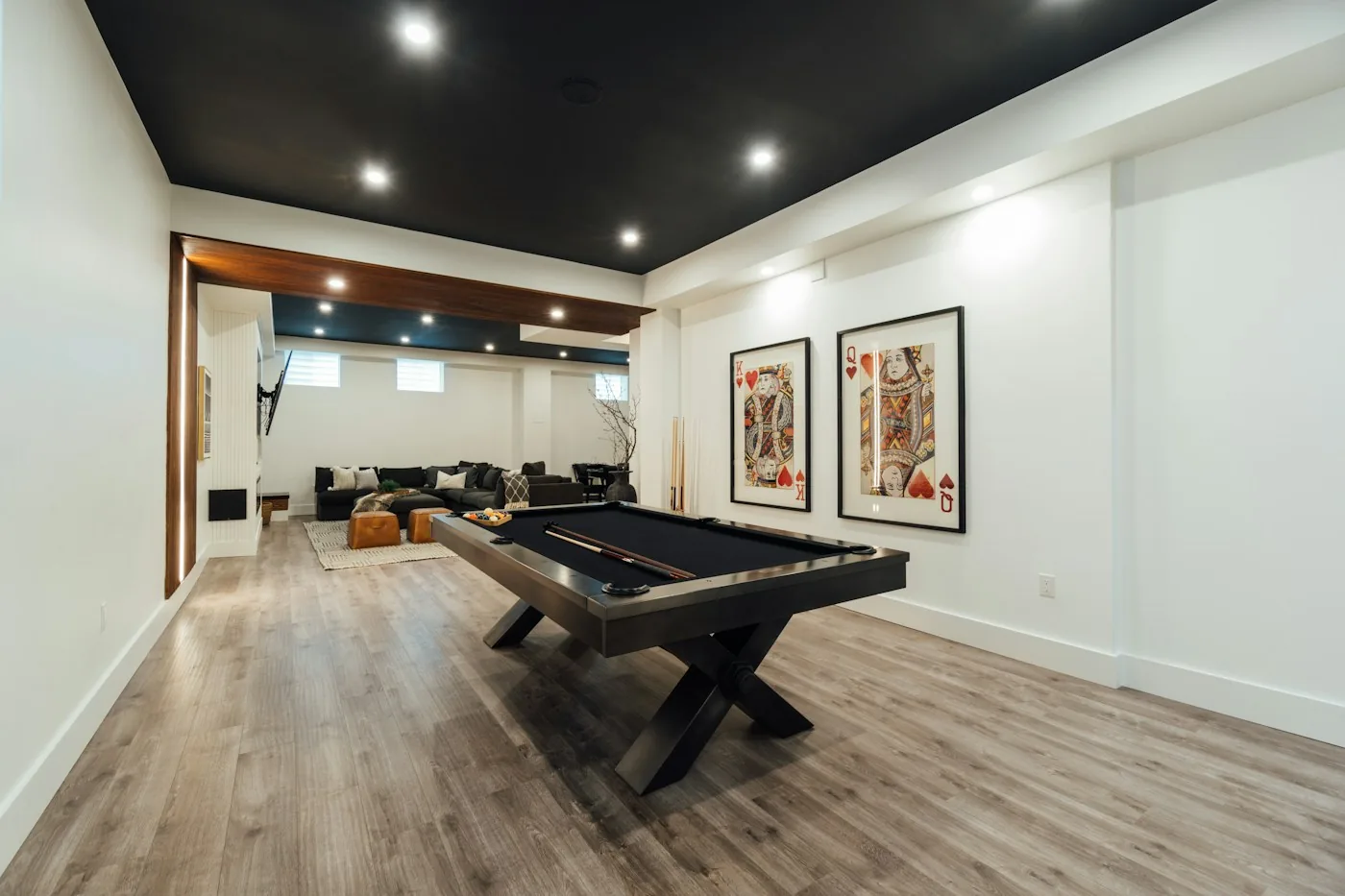
Use a shorter pool cue to address a measured obstruction, not to hide a room that is too small for most shots. Map the playing area and cue movement before choosing a table or a set of cues.
Start from the playing surface
Brunswick’s current room guide distinguishes a standard 58-inch cue from 52-inch and 48-inch alternatives. The relevant starting measurement is the table’s playing area, not its shipping length or the exterior rails. A rough geometric planning calculation adds one cue length on each side; it is a starting estimate, not a guarantee of comfortable stroke room.
| Illustrative 38 × 76-inch playing area | Width plus two cues | Length plus two cues |
|---|---|---|
| 58-inch cue | 154 inches | 192 inches |
| 52-inch cue | 142 inches | 180 inches |
| 48-inch cue | 134 inches | 172 inches |
Understand the limits of the calculation
The table above is our arithmetic example, not a copied manufacturer room chart. It does not add room for a backswing, furniture, wall projections or the player’s stance. It also assumes the same clearance is available around the whole playing area. Use the game-room planner to organize measurements, then verify the actual location.
A column may affect only a few shots, while a close wall along an entire side can constrain many. Mark those zones on a room sketch. Test a cue-length placeholder from likely cue-ball positions, including shots near a cushion. Avoid judging the room only from the table center.
Choose a targeted solution
For an occasional tight corner, a shorter cue kept nearby may be a manageable compromise. If most positions require it, compare a smaller table or a different layout. Check the shorter cue’s actual length and construction rather than assuming every junior cue is the same. The fit decision is personal to the room; we have not measured how a particular cue feels or changes your play.
Sources and method
This is a researched decision guide. Product facts were checked against the primary sources below on November 2, 2026. Selection advice and worked examples are editorial reasoning. This guide does not include hands-on testing.