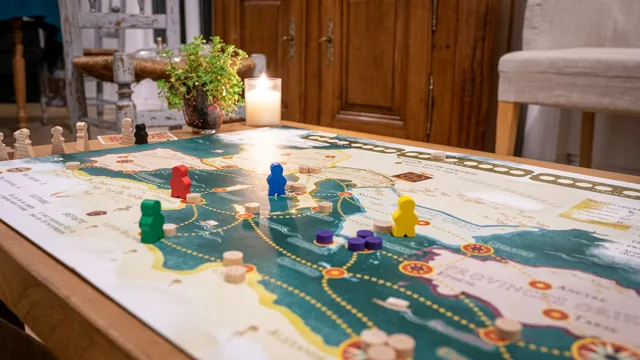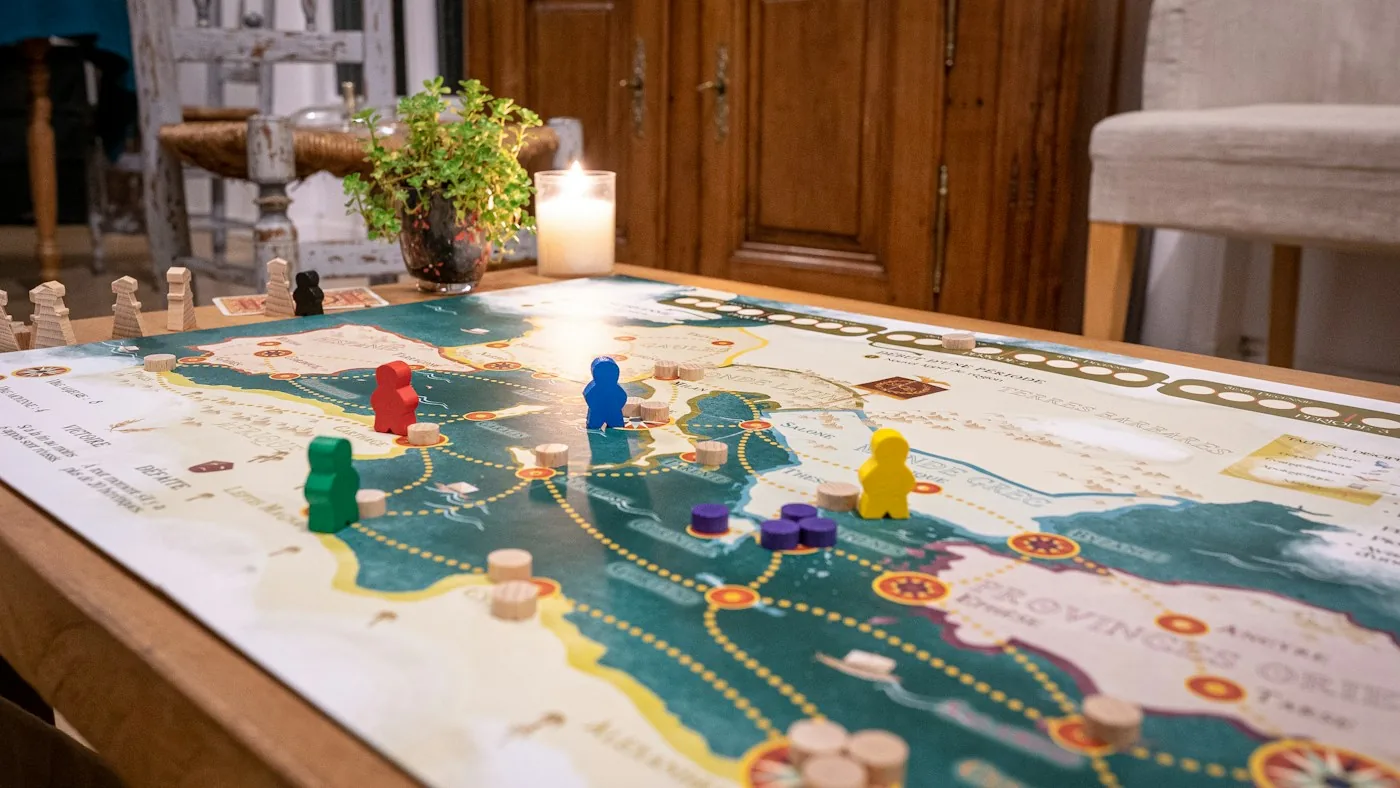
Choose a board-game style by the decision you want to repeat. Drafting asks what to take from a changing selection. Engine building asks what to add so later actions work better. Area control asks where to commit influence or pieces so the map rewards you. Many games combine more than one of these ideas.
| Style | Typical decision | Interaction to inspect |
|---|---|---|
| Drafting | Which available item should I keep, and what will I leave? | How choices change other players’ options. |
| Engine building | Which addition improves my future production or action sequence? | How opponents compete for components or interrupt the plan. |
| Area control | Where should I commit enough presence to gain or retain an advantage? | How territory is contested and when control scores. |
Drafting: choose from an opportunity that will change
Gamewright describes Sushi Go as a pick-and-pass card game. The passing structure means a selection affects what remains available to others. In the original Azul rules, players choose a color from a factory or the shared center. These are different draft procedures, so the label alone does not tell you whether choices are simultaneous or sequential.
If you enjoy reading opponents’ needs, inspect how much of their position is visible. If you prefer concentrating on your own plan, check whether denying a rival an item is a frequent consequence. Neither kind of drafting is automatically a friendly or confrontational experience.
Engine building: improve later actions
The official Wingspan reference shows how birds occupy habitats and how eligible powers can activate when those habitat actions are taken. That illustrates an engine: an earlier addition changes what a later action can produce. The exact timing and cost still come from the card and rules.
Ask how long a new component has to pay back its cost. Some designs offer a short efficiency race; others allow more elaborate combinations. More cards or more resources do not necessarily mean better decisions if they do not contribute to the objective before the game ends.
Area control: position and scoring must be read together
In Small World’s official rules, occupying regions generates coins at the end of a turn, and players must decide when to move an overextended civilization into decline. That connects spatial expansion with timing. Its fantasy powers and conquest system are particular to this game, not universal area-control rules.
Inspect whether scoring uses a majority, exclusive occupation, a threshold or a specific objective. Then check whether conflict removes pieces, forces retreat or simply changes a marker. A map full of miniatures does not establish how direct or punishing interaction will be.
Mechanisms overlap
A draft can supply pieces for an engine. An engine can produce resources used to compete on a map. A game’s main label may describe the most visible component while another mechanism determines the decisions you actually enjoy. Read one complete turn and the scoring procedure before choosing from a category list.
For example, if you dislike losing territory, a beautiful map may be less relevant than whether opponents can remove your pieces. If you enjoy combinations, check whether effects persist between turns rather than assuming every card game builds an engine.
Choose a first comparison
Compare two games by one repeated decision: choosing scarce options, investing in future output or contesting position. Record the supported player count and the amount of reading, setup and interaction. Use publisher examples to understand the actions, and reserve claims about pace or balance for actual observations.
The best style for your evening is the one whose choices the group wants to make. These categories are useful routes into the collection, not grades of sophistication or a promise that a particular game will suit everyone.
Sources and method
This guide uses the primary publisher or manufacturer sources below, checked November 2, 2026. The selection criteria and examples are editorial analysis. This guide does not include hands-on tests, measured play or setup times, or universal rankings.
- Gamewright Sushi Go: pick-and-pass format, fixed box contents and player range
- Azul official Next Move rules: player-count setup, tile drafting and scoring
- Wingspan official Rulepop reference: actions, habitats and bird powers
- Small World official English rulebook: conquest and scoring procedure
- Days of Wonder Small World: conquest, race/power combinations and decline
We may earn a commission when you purchase through links on this page. As an Amazon Associate I earn from qualifying purchases.