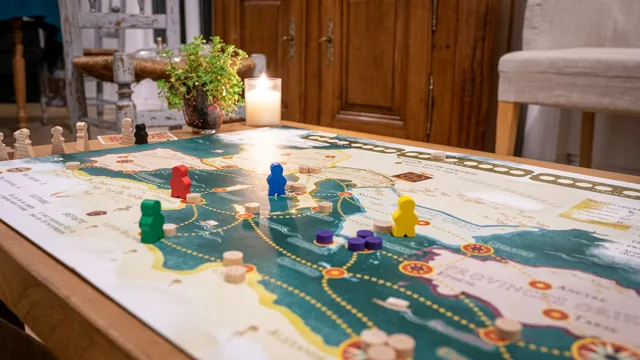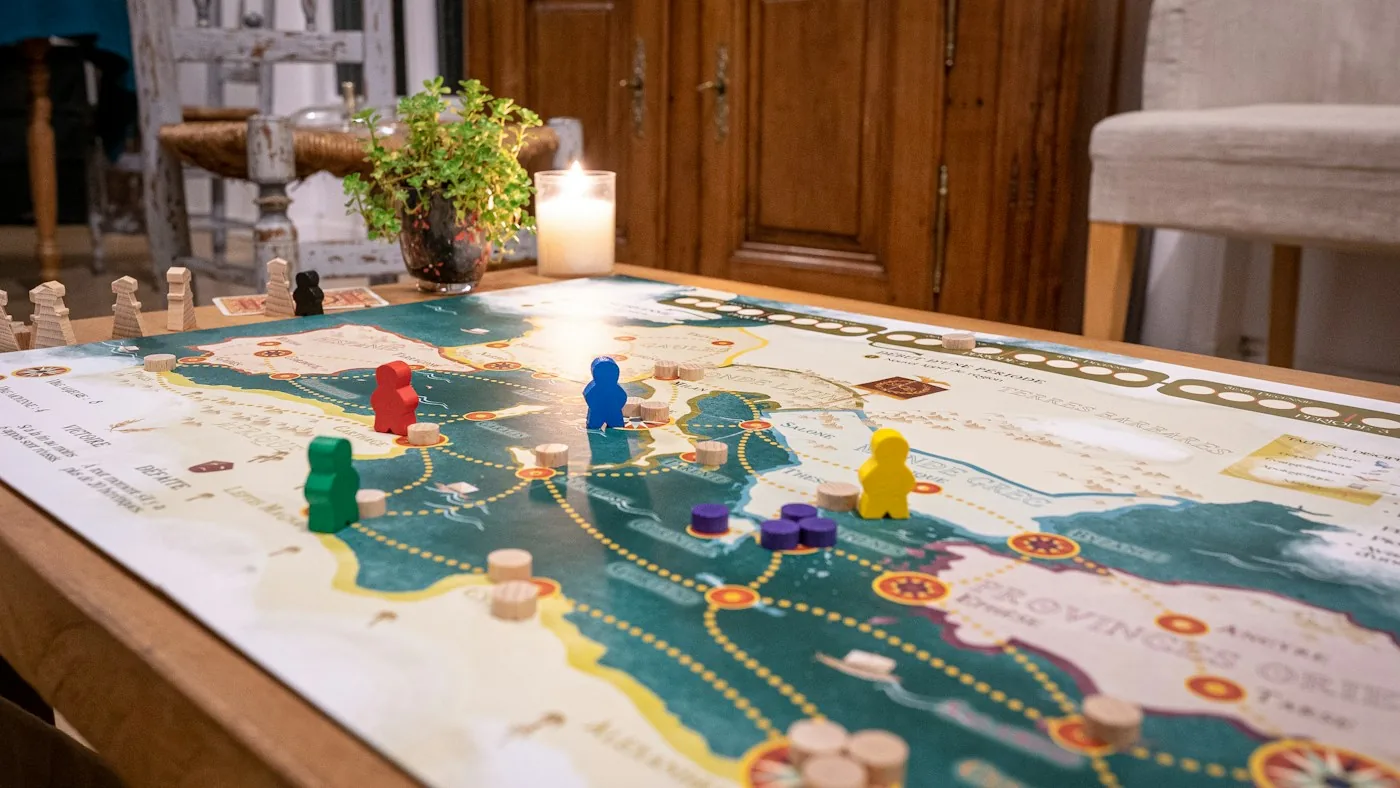
If you want more control over outcomes, ask where randomness enters the game. A random starting position, a hidden hand and a die rolled after committing to an action create different decisions. A game can have variable setup while resolving every later move without a random test.
| Source of uncertainty | Question to ask |
|---|---|
| Random setup | Is the result visible before players begin making decisions? |
| Hidden information | Can an opponent hold something you cannot inspect? |
| Random draws during play | Do new options arrive unpredictably between turns? |
| Chance resolution | Can a chosen action succeed or fail because of a later roll or draw? |
Two candidates with different setup models
Gen42’s Hive Pocket page identifies it as a two-player game and gives it a publisher luck rating of zero. Pieces form the playing area as the game develops. That makes it a candidate for someone who wants decisions about a visible position rather than dice-based resolution.
In Onitama, the movement deck is shuffled to select the starting cards. Two cards go to each player and a fifth remains beside the board; a used movement card is exchanged with that side card. The opening selection varies, while those visible movement options circulate during the game.
Explain what low randomness does not promise
Removing chance does not guarantee a close match. Experience, calculation and familiarity with the position can create large skill differences. If a beginner wants occasional surprises or opportunities to recover, a completely predictable resolution system may not be the only enjoyable option.
Open information also does not make a game simple. The number of possible consequences can be large even when everyone sees the same pieces. Choose the level of concentration you want, rather than treating the absence of dice as an automatic accessibility advantage.
Recognize a useful contrasting case
Azul’s rules draw tiles randomly from a bag to fill the factories, after which the available selections are visible. This combines an unpredictable supply with informed choices about the current display. It should not be described as having no randomness.
The distinction can help you choose. You may enjoy evaluating a fresh shared puzzle each round while disliking a die that overturns a carefully chosen move. Or you may prefer a fixed rules environment with no new random input after setup. State that preference precisely when comparing recommendations.
Audit the complete rulebook
Look beyond the main action. Starting-player selection, hidden objectives, shuffled event decks and tie-break procedures may all matter to your definition of control. Separate optional variants from the standard game and record which one a review actually used.
Do not assign a percentage of skill versus luck without a defined model and evidence. A publisher’s numeric category is its own classification, not a measurement you can combine with another maker’s scale. We use the descriptions here to explain mechanisms rather than produce a numerical fairness score.
Choose for the kind of decisions you enjoy
Investigate Hive Pocket if you want a compact duel centered on a developing visible position. Investigate Onitama if a changing initial movement set and shared future moves appeal to you. Consider a visible-draft game if adapting to a random supply is enjoyable even though chance-free resolution matters.
For a pair with different experience levels, decide how you will learn together and whether to use any official teaching variant. A game with little randomness can be rewarding because its consequences are understandable; it still needs to fit the people at the table.
Sources and method
This guide uses the primary publisher or manufacturer sources below, checked November 2, 2026. The selection criteria and examples are editorial analysis. This guide does not include hands-on tests, measured play or setup times, or universal rankings.
- Gen42 Hive Pocket: two players, 26 pieces, no fixed board and publisher luck rating
- Arcane Wonders Onitama: five selected movement cards circulate between players
- Azul official Next Move rules: player-count setup, tile drafting and scoring
We may earn a commission when you purchase through links on this page. As an Amazon Associate I earn from qualifying purchases.