Start with the decision you need to make, then open an exact-edition guide for contents, requirements, limitations, and sources. These guides are research-based; they do not claim a hands-on play session.
We may earn a commission when you purchase through links on this page. As an Amazon Associate I earn from qualifying purchases.
Department pages explain the choices that matter across tabletop, screen-based, solo, cooperative, family, social, and outdoor play. Product coverage expands as the research is completed.
Choose a checkers or draughts board by the named variant. English draughts and international draughts use different board grids and starting inventories, even though both involve contrasting discs…
Choose a jigsaw challenge by looking at the picture, the cut and the physical workspace together. Piece count tells you how many placements are involved; it does not…
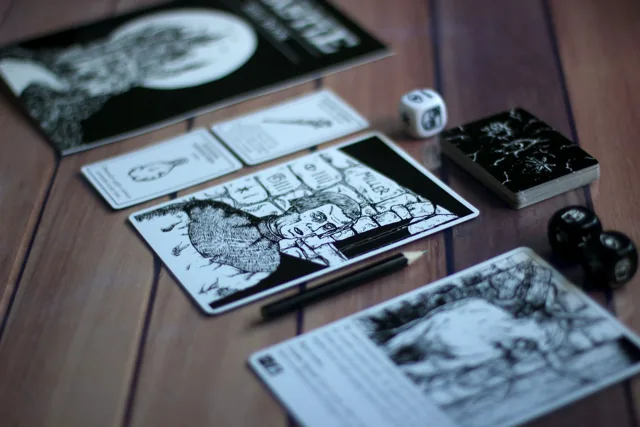
Choose a tabletop RPG by the decisions you want to make during play. A familiar setting is a useful invitation, but the recurring procedure determines whether a group…
For two people, choose an abstract game by the kind of decision and physical interaction you want. Familiarity, table space, and the willingness to study a shared rules…
Choose a first Commander deck by its plan, rules burden and the group you will join. A preconstructed deck can provide a ready starting list, but the commander’s…
Inspect the television’s inputs before buying a PS1 cable. An original PlayStation sends analog video, so an HDMI-only television needs active conversion.
Choose a charging dock by the exact controller model, battery system and charging contacts. A stand shaped for a controller can still be the wrong charger, especially when…
Choose a remapping controller by where its settings are stored and where they can be changed. A controller with onboard profiles can retain supported settings, but the initial…
A conversation deck’s value depends on the prompts people want to discuss and the kind of repetition they enjoy. Card count alone cannot tell you how many satisfying…
For a parent and one child, start with an officially supported two-player game and a task the child can help solve. A cooperative label does not by itself…
To reduce the chance of one person making every cooperative decision, look at information and roles. Private preparation, communication limits, and clearly owned turns can help distribute decisions,…
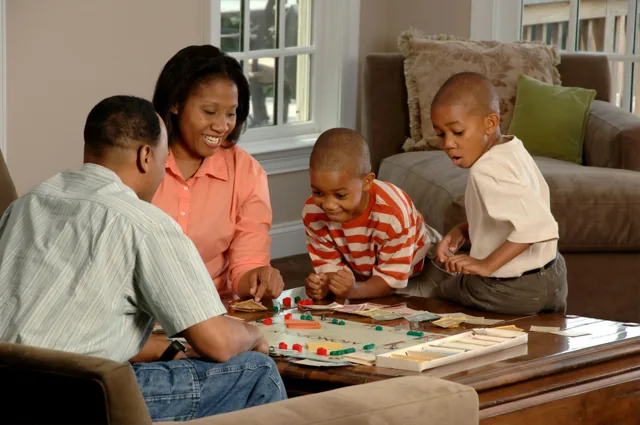
Choose cooperative or competitive play by the mood the family wants, then inspect how the rules distribute decisions. Sharing a victory condition does not guarantee equal participation, and…
For the cited standard adult layout, measure 27 ft between the front edges of the cornhole boards. If your yard cannot hold that layout plus the equipment and…
Choose an arcade format by the controls’ final height, the players sharing them and the supporting furniture. A small cabinet can save storage space while still needing a…
Cross-play asks whether people on different systems can join a match. Cross-progression asks whether one person’s progress follows them between systems.
Choose a travel crossword book by the interior you will write in, not just the dimensions of the cover. The useful checks are grid-cell size, clue readability, binding…
Before buying another D&D book, identify the rules your group uses and the specific material you want from the purchase. An older adventure, an older subclass and an…
An adventure book provides a situation to run; it may not provide every rule, character option or creature needed to run it. Build a dependency list from the…
Choose a D&D starter by the rules generation, group size and teaching format you want. Heroes of the Borderlands is the newer starter route; Dragons of Stormwreck Isle…
For one Dungeon Master and one player, choose an adventure with an explicit small-group procedure before choosing the setting. Two people at the table do not automatically equal…